Midori Sour Recipe: The Bright, Balanced Melon Cocktail
A great midori sour recipe is all about balance: vivid melon sweetness, bright citrus, and a clean, refreshing finish that makes you want another sip. It’s one of those cocktails that looks playful—neon green, undeniably retro—but can taste surprisingly polished when you build it with fresh juice and the right proportions. If you’ve only had a syrupy version in the past, this guide will show you how a well-made midori sour recipe can be crisp, zesty, and genuinely satisfying.
This article is a full professional deep dive into the midori sour recipe people actually want to make at home. You’ll learn the classic build, a modern fresh-citrus version, a creamy foamy option, and easy ways to adjust sweetness and strength without losing that signature melon character. You’ll also find serving tips, substitutions, batch methods for parties, and troubleshooting—plus a conclusion placed right before the FAQs, with meta title and meta description at the very end.
What a Midori Sour Recipe Should Taste Like
At its best, a midori sour recipe tastes bright and juicy rather than overly sweet. The melon liqueur brings a candy-like aroma, but the citrus should keep it in check so the drink feels refreshing. When the balance is right, the finish is clean and lightly tart, with just enough sweetness to round the edges and make the melon flavor pop.
Texture matters too. A midori sour recipe can be lively and fizzy when topped with soda, or silky and plush when shaken with egg white for a soft foam. Both styles are “correct,” but they drink differently. The fizzy version is breezy and easy; the foamy version feels more crafted and cocktail-bar inspired.
Midori Basics: Why This Liqueur Defines the Drink
A midori sour recipe is built around Midori, a Japanese melon liqueur known for its bright green color and sweet muskmelon flavor. That unmistakable color is part of the appeal, but the real reason Midori works here is its ability to carry fruit flavor through citrus. Even a small amount can make a drink smell and taste like melon from the first sip.
Because Midori is sweet, the best midori sour recipe choices focus on controlling additional sugar. That’s why modern versions often use fresh lemon and lime instead of bottled sour mix. Fresh juice gives sharpness, clarity, and a more “grown-up” profile, while still letting the drink keep its playful identity.
The Core Formula Behind Any Midori Sour Recipe
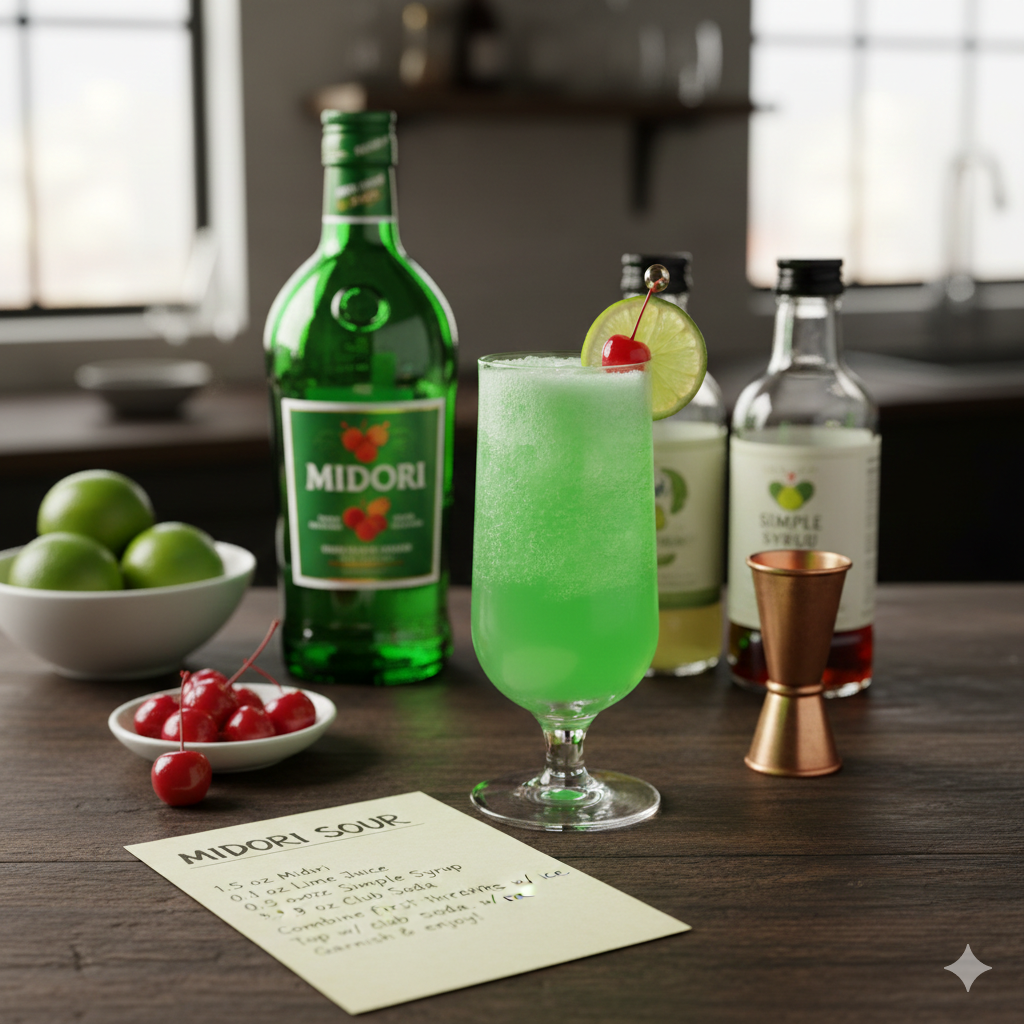
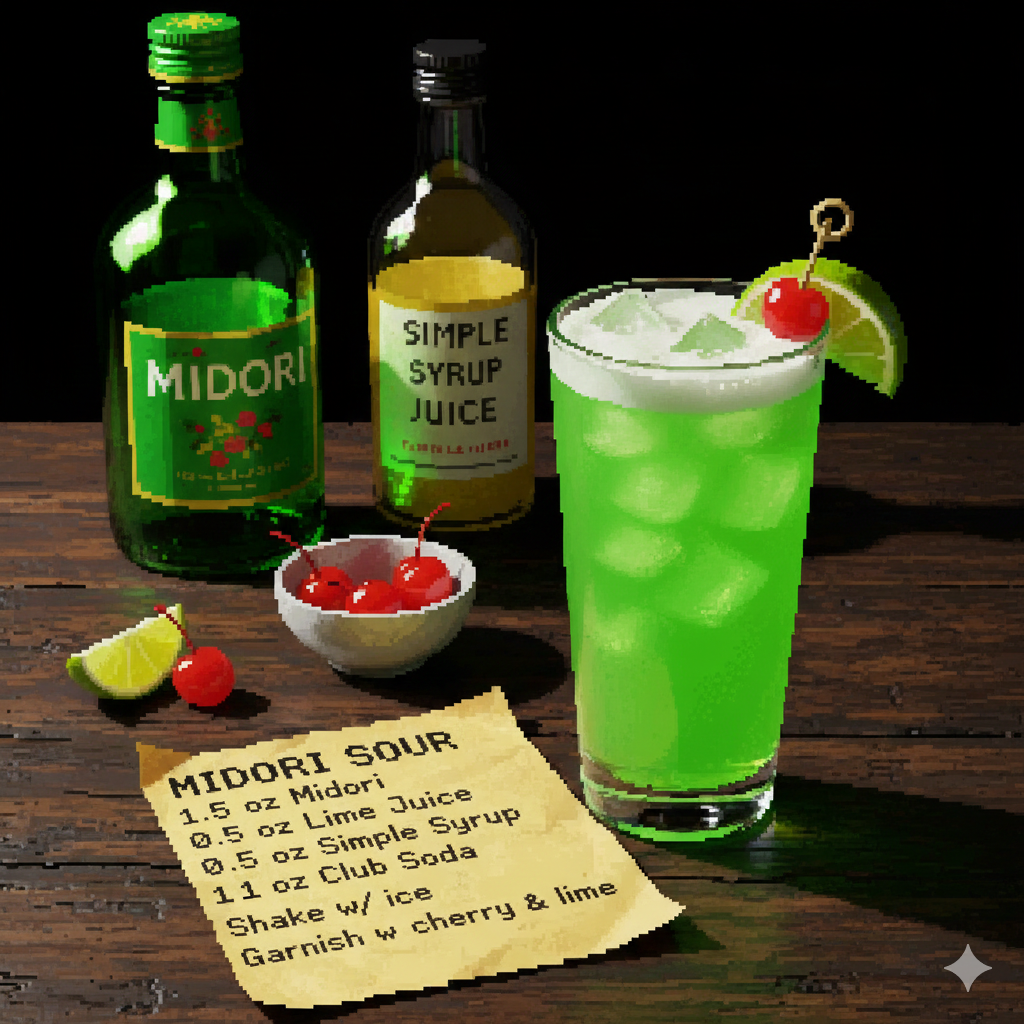
Almost every midori sour recipe fits into a simple structure: Midori + citrus + dilution, with optional lift from soda and optional strength from an added spirit. Once you understand that structure, you can customize the drink without accidentally turning it flat or overly sweet. Midori supplies the base flavor, citrus provides brightness, and water from shaking or soda brings the drink into balance.
Think of a midori sour recipe as a sliding scale. More citrus makes it sharper and more refreshing. More Midori makes it sweeter and more melon-forward. Adding vodka or another spirit makes it stronger and drier, while soda lightens the body and makes the drink feel more sessionable.
Ingredients You’ll See in Top Midori Sour Recipe Versions
A classic midori sour recipe commonly includes Midori, lemon juice, and either simple syrup or a sweet-and-sour component, often finished with soda or lemon-lime soda. Many modern recipes use both lemon and lime for a brighter, more layered acidity. Some add vodka to boost alcohol and keep the drink from tasting like pure liqueur.
Optional ingredients can transform the experience without complicating the process. Egg white can add a beautiful foam and soften the sharpness of citrus. A pinch of salt or a tiny saline solution can make flavors pop. Fresh garnishes like lime wheels, lemon twists, or a maraschino cherry can make a midori sour recipe look as good as it tastes.
The Best Midori Sour Recipe for Most Home Bartenders
If you want one go-to midori sour recipe that works for almost everyone, aim for a fresh-citrus, lightly fizzy build. Use Midori as the star, balance it with equal parts lemon and lime juice, and top with club soda for a clean finish. This style tastes modern, bright, and not overly sweet.
The reason this midori sour recipe works so consistently is that it relies on fresh acidity rather than pre-made mixes. Fresh juice gives you control. If the drink tastes too sharp, you can add a touch of simple syrup. If it tastes too sweet, you can add more citrus or more soda. It’s a flexible template you can refine to your taste.
Classic Retro Midori Sour Recipe with Sour Mix
Some people specifically want the nostalgic version: a midori sour recipe made with sour mix and a splash of lemon-lime soda. That style is sweeter, softer, and very easy to make quickly. It’s also the profile many people associate with 80s-style cocktails and party drinks.
To make this midori sour recipe taste better than the average “too sweet” version, focus on dilution and freshness even if you’re using sour mix. Use plenty of ice, stir or shake briefly to chill, and don’t overdo the soda. A squeeze of fresh citrus can brighten it without changing the character, helping the drink feel less one-note.
Fresh Citrus Midori Sour Recipe Without Sour Mix
A fresh-juice midori sour recipe is where the drink really shines. Using freshly squeezed lemon and lime creates a crisp tang that cuts through the sweetness of Midori and makes the melon taste more natural. This approach is often described as a “modern Midori Sour” because it fits today’s preference for clean, bright cocktails.
To keep this midori sour recipe balanced, start with modest sweetness and build up only if needed. Midori already brings sugar, so many people find they don’t need much extra syrup. If your lemons are especially tart, a small amount of simple syrup can smooth the edges, but the goal is still a refreshing citrus-forward finish.
Midori Sour Recipe with Vodka for a Stronger, Cleaner Finish
If you want a midori sour recipe that tastes less like liqueur and more like a full cocktail, adding vodka is a popular choice. Vodka increases strength without adding competing flavors, which keeps Midori’s melon profile front and center. It also helps the drink feel drier and more balanced when you’re using a sweeter style.
This midori sour recipe variation is especially useful when serving people who enjoy classic sours but want something different. The vodka version can taste sharper and more grown-up, particularly when paired with fresh lemon and lime. It’s still bright and fun, but it has more backbone.
Midori Sour Recipe with Egg White for a Smooth Foam
A foamy midori sour recipe feels like a craft cocktail while still keeping the drink’s iconic color and melon aroma. Egg white creates a silky texture and a creamy foam cap that makes the citrus feel softer and more integrated. The result is smoother on the palate and visually impressive in the glass.
The best way to make this midori sour recipe style is the classic dry-shake technique: shake without ice first to build foam, then shake again with ice to chill and dilute. Strain into a chilled glass and garnish simply so the foam stays pretty. If egg white isn’t your thing, a foaming alternative can still deliver a similar look and mouthfeel.
Choosing Lemon, Lime, or Both in a Midori Sour Recipe
A midori sour recipe can lean on lemon, lime, or a mix of both depending on the flavor you want. Lemon tends to taste brighter and slightly sweeter, while lime feels sharper and more aromatic. Using both often creates the most balanced result because it brings layered acidity that complements melon.
If you’re dialing in your own midori sour recipe, consider your Midori pour and your soda choice. Lemon-lime soda adds sweetness and citrus flavor, so you might reduce extra juice. Club soda adds no sugar, so you can use more citrus and still keep the drink refreshing rather than cloying.
Soda Water vs Lemon-Lime Soda in a Midori Sour Recipe
The choice of fizz changes the whole vibe of a midori sour recipe. Club soda keeps the drink crisp, light, and more adult-leaning, especially when paired with fresh citrus. It adds lift without adding extra sweetness, which helps Midori’s melon flavor feel cleaner.
Lemon-lime soda turns a midori sour recipe into a sweeter, more nostalgic drink. It’s easy, crowd-pleasing, and familiar, but it can push the drink toward dessert-like sweetness if you’re not careful. If you love the soda version, balancing with fresh lemon or lime can keep it from becoming too syrupy.
The Glassware That Makes a Midori Sour Recipe Feel Right
A midori sour recipe is most commonly served over ice in a tall glass or in a rocks glass, depending on whether you want fizz and length. A tall glass gives room for soda and keeps the drink feeling refreshing and light. A rocks glass feels more compact and intense, highlighting the melon-citrus punch.
If you’re serving a foamy midori sour recipe, a stemmed coupe can look elegant and keeps the foam front and center. The goal isn’t strict rules—it’s matching glass to style. Fizzy versions want height; shaken sour versions can look great in smaller, classic cocktail shapes.
Ice and Dilution: The Quiet Secret to a Better Midori Sour Recipe
Ice is not just for chilling a midori sour recipe—it’s how you control dilution and balance. Midori is sweet, and citrus is intense, so the right amount of water from melting ice helps everything blend. A drink that’s too strong or too sweet often needs more dilution, not more ingredients.
For a shaken midori sour recipe, use plenty of ice and shake until the outside of the shaker feels very cold. For a built drink, use a full glass of ice so it chills quickly and doesn’t water down unevenly. Consistent ice handling is one of the fastest ways to make your drink taste professional.
Sweetness Control in a Midori Sour Recipe
Because Midori is naturally sweet, a midori sour recipe can go off-balance if you add too much extra sugar. If you’re using sour mix, taste before adding soda, because many mixes are already sweetened heavily. If you’re using fresh citrus, start without extra syrup and only add sweetness if the drink tastes too sharp.
A simple trick for your midori sour recipe is to adjust in tiny steps. Add a small amount of syrup, stir or shake briefly, and taste again. It’s much easier to add sweetness than to remove it. When you hit the right point, the drink will taste melon-forward but still refreshing.
Garnishes That Elevate a Midori Sour Recipe
A garnish isn’t just decoration in a midori sour recipe—it sets expectations. A lime wheel or lemon twist signals bright citrus and makes the drink smell fresher before the first sip. A maraschino cherry adds a retro vibe and looks great against the green color.
If you want something more “crafted,” try a thin cucumber ribbon or a small melon ball garnish. These pair naturally with the melon profile and make the midori sour recipe feel intentional without being fussy. Keep garnishes simple and clean so they complement rather than compete.
Midori Sour Recipe Variations That Still Taste True
One reason the midori sour recipe stays popular is that it adapts easily. Some variations add a different spirit like gin for herbal lift or tequila for a bolder edge. Others add a touch of orange liqueur to round out the citrus. As long as Midori and citrus remain the core, the drink still reads as a Midori Sour.
When experimenting, change one thing at a time so you can taste the impact. A midori sour recipe can quickly become unbalanced if you stack too many sweet ingredients. Keep the structure steady—melon, acid, dilution—and you’ll be able to explore new versions without losing the identity.
A Frozen Midori Sour Recipe for Summer Parties
A frozen midori sour recipe turns the drink into a slushy, bright green treat that’s perfect for hot weather. The key is not letting it become overly sweet. Because freezing dulls flavors, you’ll often want a little extra citrus to keep the finished drink tasting lively.
Blend ice with Midori and fresh citrus until smooth, then taste and adjust with a tiny amount of sweetener only if needed. This midori sour recipe style is especially fun for gatherings because it looks festive and feels like a dessert cocktail without being heavy.
Pitcher and Batch Midori Sour Recipe for Groups
If you’re hosting, a batch midori sour recipe is a smart move because it reduces last-minute shaking and measuring. The easiest approach is to mix Midori, citrus juice, and any optional spirit in a pitcher ahead of time, then chill it well. When guests arrive, pour over ice and top with soda in each glass.
Batching works best when you separate the fizz. If you add soda too early, the midori sour recipe goes flat. Keep soda or sparkling water on the side so each serving stays lively. This method also lets guests adjust sweetness and strength easily.
A Non-Alcoholic Midori Sour Recipe Inspired Mocktail
You can make a mocktail-style midori sour recipe experience by focusing on melon flavor, citrus, and fizz. Use a melon syrup or melon-flavored base, add lemon and lime juice, and top with sparkling water. The goal is to capture the sweet-tart profile and bright color without alcohol.
To keep the mocktail midori sour recipe balanced, lean into citrus and avoid over-sweetening. A touch of salt can help mimic the complexity alcohol brings, and a simple garnish like lime makes it feel like a real cocktail. It won’t be identical, but it can be satisfyingly close in spirit and flavor.
Food Pairings That Make a Midori Sour Recipe Shine
A midori sour recipe pairs best with foods that like citrus and a hint of sweetness. Think salty snacks, lightly spicy appetizers, grilled chicken, or fresh fruit-forward dishes. The drink’s melon profile can also work well with Asian-inspired flavors, especially those that use ginger, soy, or chili in a balanced way.
If you’re serving a sweeter midori sour recipe, pair it with salt and crunch to keep the experience from feeling too sugary. If you’re serving a sharper fresh-citrus version, it can handle richer foods because the acidity cuts through fat. Pairing is mostly about balance, and the drink gives you a lot of flexibility.
Troubleshooting a Midori Sour Recipe That Tastes “Off”
If your midori sour recipe tastes too sweet, the fix is usually more acidity or more dilution. Add a bit more lemon or lime, or add more ice and stir or shake briefly. If the drink tastes flat, a top-up of soda and a fresh citrus garnish can bring it back to life.
If your midori sour recipe tastes too sharp, add sweetness in very small amounts and avoid drowning it in syrup. Midori itself can handle much of the sweetness load, so you rarely need a lot of extra sugar. If the drink feels harsh, chilling and dilution are often the missing pieces.
Common Questions About Sour Mix in a Midori Sour Recipe
People often ask whether sour mix belongs in a midori sour recipe, and the honest answer is that it depends on the experience you want. Sour mix is convenient and nostalgic, but it can be overly sweet and one-dimensional. Fresh citrus takes a little more effort, but it usually tastes brighter and more balanced.
If you love the flavor of sour mix, consider upgrading it by using a higher-quality mix or adding a splash of fresh lemon. This approach keeps the midori sour recipe easy while improving taste. The best choice is the one that fits your time, your audience, and your preferred profile.
Midori Sour Recipe for Beginners: The Confidence Approach
The easiest way to succeed with a midori sour recipe is to keep the first attempt simple. Use Midori, fresh citrus, ice, and soda. Taste it. Then adjust slightly. When you treat the recipe like a template rather than a strict rule, you learn faster and end up with a drink you truly enjoy.
Once you have a baseline midori sour recipe you like, you can experiment with vodka, foam, or different garnishes. But a strong foundation matters more than fancy extras. The goal is a drink that tastes refreshing and balanced, not one that looks complicated.
Conclusion
A well-balanced midori sour recipe is more than a neon throwback—it’s a genuinely refreshing melon-citrus cocktail that can be as simple or as crafted as you want. By focusing on fresh citrus, proper dilution, and thoughtful sweetness control, you can make a midori sour recipe that tastes clean, bright, and modern while still delivering that iconic melon flavor and vivid green color.
Whether you prefer a fizzy highball style, a vodka-boosted version, or a silky foamy sour, the best midori sour recipe is the one you can repeat confidently. Start with a reliable core, taste as you go, and adjust in small steps. Once you dial in your favorite balance, this cocktail becomes an easy, crowd-pleasing staple you’ll be happy to serve again and again.
Frequently Asked Questions
What is the classic midori sour recipe made of?
A classic midori sour recipe typically includes Midori melon liqueur, citrus (often lemon and sometimes lime), and either sour mix or a small amount of simple syrup, often finished with soda or lemon-lime soda for lift.
Can I make a midori sour recipe without sour mix?
Yes, and many people prefer it. A fresh-juice midori sour recipe uses lemon and lime juice for a cleaner, brighter flavor, with sweetness adjusted gently if needed.
Should I shake or build a midori sour recipe?
Both work. Shaking a midori sour recipe (especially with fresh juice) chills and blends quickly, while building it over ice is fast and keeps it lighter when you’re topping with soda.
How do I make my midori sour recipe less sweet?
Use club soda instead of lemon-lime soda, increase citrus slightly, and make sure you’re not adding extra syrup unnecessarily. More dilution can also help a midori sour recipe taste cleaner.
Can I add vodka to a midori sour recipe?
Yes. Vodka is a common addition because it strengthens the drink without changing the flavor profile much, giving the midori sour recipe a cleaner, more cocktail-like backbone.