
LessInvest.com Crypto: Arbitrage, Futures, Investing, and Withdrawals Made Clear
If you searched lessinvest.com crypto, you’re likely trying to do one of three things: understand a crypto topic without getting lost in jargon, compare methods like arbitrage and futures, or fix something practical such as a withdrawal issue. Crypto moves fast, and most confusion doesn’t come from “not being smart enough.” It comes from missing one small detail, like how fees stack, how networks work, or why leverage behaves the way it does.
This page is built to keep things simple, realistic, and safety-first. Nothing here is financial advice. It’s plain education so you can make your own calls with fewer surprises.
What you’ll find in the LessInvest.com Crypto section
The goal of lessinvest.com crypto is clarity. That means explaining the core ideas people keep searching for, then adding the real-world parts that matter: risk, fees, timing, and common mistakes.
You’ll see these topics come up again and again because they’re the ones that cause the biggest losses when misunderstood: crypto arbitrage, crypto futures, basic investment planning, and withdrawals. If you’ve searched lessinvest com crypto with any of those phrases, you’re in the right place.
Crypto basics that stop expensive mistakes
Before arbitrage, futures, or even a simple buy, you need a few fundamentals that most “quick guides” skip.
Start with wallets and custody. If your crypto sits on an exchange, you are trusting that platform to manage security, withdrawals, and access. If you move funds to a self-custody wallet, you control the private keys, which also means you carry the responsibility. People usually discover this difference the hard way when an account is locked, a phone is lost, or a withdrawal is delayed.
Next, understand networks. The same token can exist on multiple networks. A USDT withdrawal, for example, might offer several options. Pick the wrong network and you can send funds into a place that’s hard to recover. This is one of the most common causes of “missing crypto” tickets.
Fees are the third basic. There are trading fees, withdrawal fees, and network fees. The fee you see on the screen is not always the total cost once slippage and spreads are included.
If you want to use lessinvest.com crypto investment content effectively, these basics are the foundation. Without them, every advanced method becomes riskier than it needs to be.
Crypto arbitrage explained without the hype
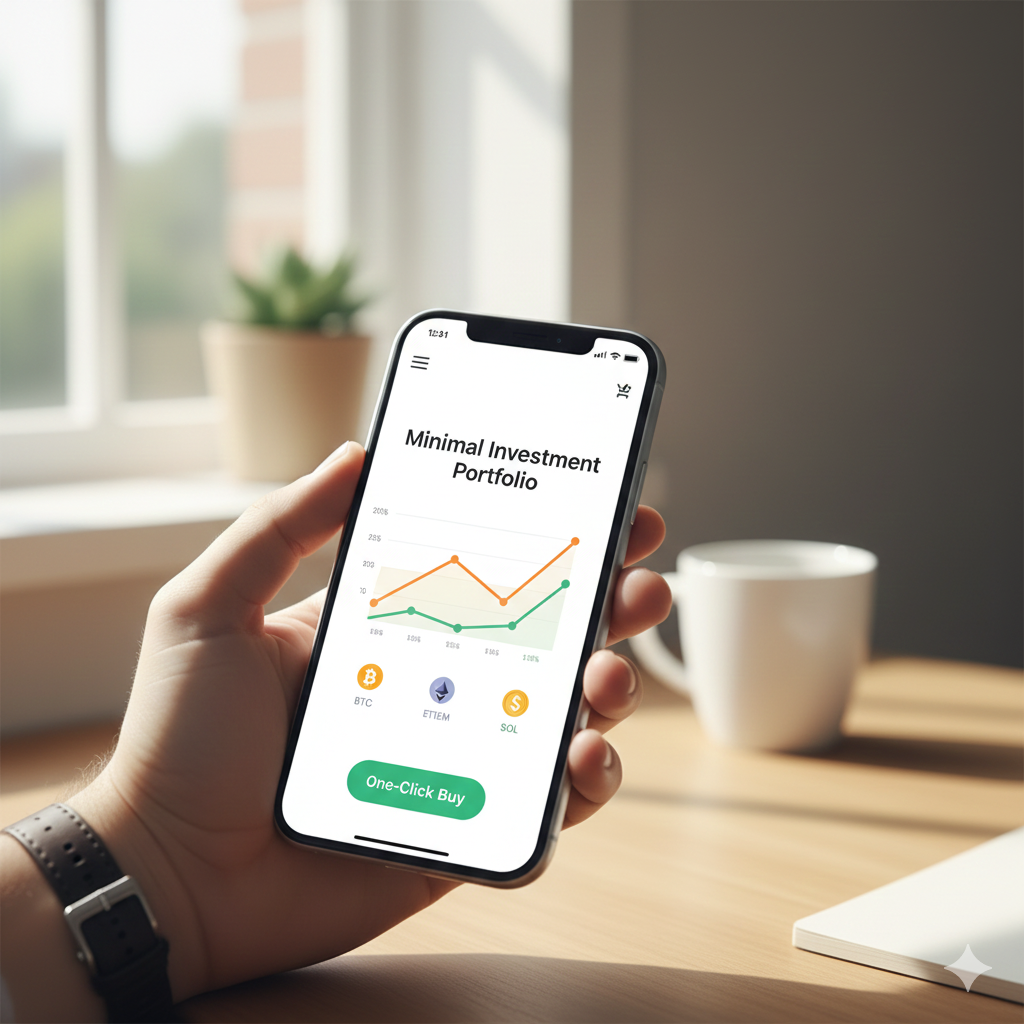
A lot of people land here after searching lessinvest.com crypto arbitrage. The word “arbitrage” sounds like a clean, safe shortcut: buy low in one place, sell higher in another, collect the difference. In theory, it’s simple. In real markets, it’s messy.
Arbitrage is the attempt to profit from price differences across markets or instruments. The problem is that markets adjust quickly, and your costs don’t stay still. The spread can vanish in seconds, transfers can take minutes, and fees can eat what looked like profit.
There are a few common arbitrage styles people talk about.
One is exchange-to-exchange arbitrage, where you buy on one platform and sell on another. This tends to be harder than it looks because it relies on fast transfers, stable liquidity, and predictable fees.
Another is triangular arbitrage, where you cycle through three trading pairs on the same exchange. This avoids transfer delays but depends on deep liquidity and very tight spreads. Without that, slippage quietly flips your “profit” negative.
A third is futures-spot arbitrage, where traders try to capture differences between spot prices and futures prices. This is where beginners get trapped by funding rates, margin requirements, and sudden volatility spikes.
If you came in through a search like allintitle:lessinvest.com crypto arbitrage, the main takeaway is this: arbitrage is not “risk-free.” It’s risk-shifted. You trade market direction risk for execution risk, liquidity risk, timing risk, and platform risk.
Crypto futures explained for beginners
Searches like lessinvest.com crypto futures or “crypto futures explained beginners guide” usually mean one thing: you want to understand leverage without getting wiped out.
Crypto futures are contracts that track an asset’s price. You can go long if you expect price to rise, or short if you expect price to fall. Futures let you use margin, which is borrowed exposure. That leverage is powerful, but it’s also unforgiving.
Here are the futures concepts that matter most.
Margin is your collateral. If your position moves against you and your margin falls below the maintenance requirement, you can be liquidated. Liquidation is not a “small fee.” It can close your position at the worst moment and lock in losses.
Leverage multiplies both gains and losses. A small move can become huge in your account. That’s why risk control is not optional in futures trading.
Funding rates are another factor. On perpetual futures, funding is a mechanism that keeps contract prices aligned with spot prices. Depending on market conditions, you may pay or receive funding. Beginners often ignore this and then wonder why a “flat” trade still loses money over time.
Order type matters too. Market orders can fill quickly, but during fast moves they can fill at a worse price than expected. Limit orders give you price control, but they might not fill.
If you’re reading lessinvest.com crypto futures explained beginners guide content, the safest mental model is this: futures are not just “spot trading but faster.” They are a different system with different failure points.
A realistic approach to crypto investing
Many readers search lessinvest.com crypto investment because they want a sensible plan, not a gamble.
A basic plan starts with time horizon. Are you investing for months, years, or trying to trade daily volatility? Your time horizon dictates your risk tolerance more than your confidence does.
Next is position sizing. Even a strong thesis can be ruined by oversized allocation. In crypto, drawdowns are normal. If you can’t hold through volatility without panic-selling, your position is too large.
Diversification helps, but only if it’s real. Buying ten highly correlated altcoins is not the same as spreading risk. In many market phases, everything moves together, especially during risk-off events.
A practical investing approach often includes a simple routine: decide your maximum exposure, choose a schedule, and stick to it. Many people use dollar-cost averaging because it reduces timing pressure and helps avoid emotional buying at peaks.
Security belongs inside the investment plan, not as an afterthought. Two-factor authentication, withdrawal address checks, and careful network selection are part of risk management.
LessInvest com crypto withdrawal: why withdrawals fail and how to troubleshoot safely
“Withdrawal” is one of the most searched pain points, and lessinvest com crypto withdrawal is usually typed when something feels stuck, delayed, or confusing.
Most withdrawal issues fall into a few predictable categories.
Sometimes it’s a network mismatch. The withdrawal network must match the receiving wallet’s supported network. If it doesn’t, funds can end up inaccessible without recovery tools, and recovery may not even be possible.
Sometimes it’s confirmation delay. Blockchains confirm at different speeds. During congestion, confirmations can slow down, and what normally takes minutes can take much longer.
Sometimes it’s account security or compliance checks. Exchanges may delay withdrawals if they detect unusual activity, new devices, large changes in behavior, or required identity updates.
Sometimes it’s the small details: missing memo tags for certain networks, sending below minimum withdrawal limits, or selecting the wrong token contract.
If your goal is simply to reduce mistakes, follow this safer routine: confirm the token, confirm the network, confirm the address, and send a small test amount first when the situation allows. That one habit prevents most irreversible errors.
Fca crypto: what it means and why it matters
People often search Fca crypto when they see warnings, hear about restrictions, or want to know if a platform is “regulated.”
The important point is that regulation is not a guarantee of profit or safety. It can affect how platforms market products, what checks they must do, and what consumer protections exist. Rules also change. If you are in the UK or dealing with UK-based services, FCA-related guidance is a real factor in how crypto services operate, especially around promotions, risk warnings, and onboarding.
Treat this section as a concept, not a legal opinion: if your platform is impacted by regulatory requirements, it can affect deposits, withdrawals, and available products like derivatives. Always double-check what applies in your location.
Why is crypto down?
The question Why is crypto down shows up during every major dip. The frustrating truth is that there’s rarely one single reason. Crypto reacts to a mix of macro conditions and internal market mechanics.
Macro factors include interest rate expectations, liquidity conditions, and risk appetite. When markets go risk-off, speculative assets can fall quickly.
Crypto-specific factors include leverage flushes, liquidations, exchange flow spikes, and sudden shifts in sentiment. If too many traders are positioned the same way with leverage, a move against them can trigger forced selling, which pushes prices down further.
News can matter, but the market’s positioning often matters more. A headline that would be ignored in a calm market can become a trigger in a fragile one.
A useful habit is to separate “headline explanation” from “market structure.” Headlines are easy to read. Market structure is what often drives the actual cascade.
Macroaxis login and Financedevil: why these searches show up alongside crypto research
Some readers reach this topic after searching terms like Macroaxis login or Financedevil, especially when they’re bouncing between portfolio tools, finance commentary, and crypto summaries.
If you’re in that research mode, the key is to avoid mixing tool access with decision-making. Logging into a platform or reading a finance blog won’t automatically make a strategy safer. What makes a strategy safer is understanding risk, costs, and execution limits.
Use analytics tools to measure exposure and volatility, not to chase signals. Use commentary to gather viewpoints, not to outsource judgment.
Practical semantic terms worth knowing
To make lessinvest.com crypto content easier to follow, it helps to recognize a few commonly used terms that show up across arbitrage, futures, investing, and withdrawals: spot market, order book, spread, slippage, liquidity, funding rate, margin, liquidation, collateral, network fee, confirmation, memo tag, cold wallet, hot wallet, KYC, and volatility.
You don’t need to memorize everything. You just need to know which term is causing the problem in the moment.
Conclusion
The fastest way to improve your results with crypto is not chasing new tactics. It’s removing avoidable errors. That’s what lessinvest.com crypto is built for: explaining crypto arbitrage without pretending it’s risk-free, breaking down futures without glamorizing leverage, keeping investment planning grounded, and handling withdrawals with a safety mindset.
If you’re stuck on a specific issue, start with the basics: network, fees, and execution. Most “mystery problems” become obvious once those three are clear.
FAQs
What does lessinvest.com crypto cover?
It focuses on practical education around crypto investing, arbitrage, futures basics for beginners, and common withdrawal issues, with an emphasis on risk and clarity.
Is crypto arbitrage guaranteed profit?
No. It can fail due to fees, slippage, transfer delays, liquidity limits, and fast-moving spreads. Profit depends on execution, not just theory.
Are crypto futures suitable for beginners?
They can be, but only with a cautious approach. Beginners should understand margin, liquidation, and funding before using leverage.
Why would a withdrawal be pending for so long?
Common reasons include network congestion, security reviews, compliance checks, minimum limits, or incorrect network selection. Confirmation times vary by chain.
Why is crypto down today?
Crypto can drop due to macro risk-off shifts, tighter liquidity, leveraged liquidations, and sentiment changes. Often it’s market structure plus timing, not one headline.
Does Fca crypto regulation make platforms safe?
Regulation can influence how services operate and market products, but it does not remove market risk. You still need strong personal risk control and security habits.