The Future of Digital Education: A Deep Dive into the Conceptual Schoology Alfa Platform
The world of educational technology (EdTech) is rapidly evolving, moving past simple file-sharing to embrace truly intelligent, personalized, and data-driven learning systems. While PowerSchool’s Schoology Learning is a leading Learning Management System (LMS), industry conversations are buzzing about its conceptual future: Schoology Alfa. This name—suggesting the “first” or “next-generation” version—points to a platform built on deep integration, AI-powered workflows, and a hyper-personalized Schoology Alfa user experience.
This extensive guide dives into the potential of this advanced system. We’ll explore how a refined Schoology Alfa login process leads to a host of cutting-edge features, from adaptive content delivery to AI-assisted grading. Our goal is to provide a comprehensive, well-researched view of what a truly advanced Schoology Alfa platform would offer to transform teaching and learning in the modern K-12 and higher education environment.
What Is Schoology Alfa? Defining the Next-Generation LMS
The official Schoology Learning Management System (LMS) is a powerful, cloud-based platform designed to facilitate course management, communication, and collaboration. If Schoology Alfa were to exist, it would represent a significant evolutionary leap—not just a minor update, but a re-imagining of the core LMS experience centered around artificial intelligence (AI), deep interoperability, and true personalized learning pathways.
Definition and Core Concept
Conceptually, Schoology Alfa is the vision of a Unified Digital Classroom 3.0. It’s an LMS designed not just to host files and assignments, but to actively manage the entire student lifecycle. The crucial difference between the current Schoology Learning and the conceptual Schoology Alfa LMS lies in its level of automation and personalization. “Alfa” would denote a system where routine administrative tasks are minimized, and the platform itself uses data analytics to proactively suggest interventions, modify content delivery, and optimize the overall learning environment.
Who Uses It: A Broader Institutional Reach
The primary users would remain the same, but their reliance on the advanced features would deepen:
- Students: Gaining true personalized Schoology Alfa access to adaptive learning content tailored to their current mastery level.
- Teachers: Leveraging AI-powered grading and content recommendation engines to focus on high-touch instructional moments. The Schoology Alfa teacher portal would become a true pedagogical assistant.
- Institutions/Administrators: Utilizing advanced data Schoology Alfa dashboard analytics to make strategic decisions on curriculum effectiveness, resource allocation, and identifying at-risk populations before problems become systemic.
- Commercial Use Cases: Educational content developers and corporate training divisions would use the sophisticated course authoring and deep analytics for enhanced e-learning products and measurable outcomes.
Key Architectural and Functional Schoology Alfa features
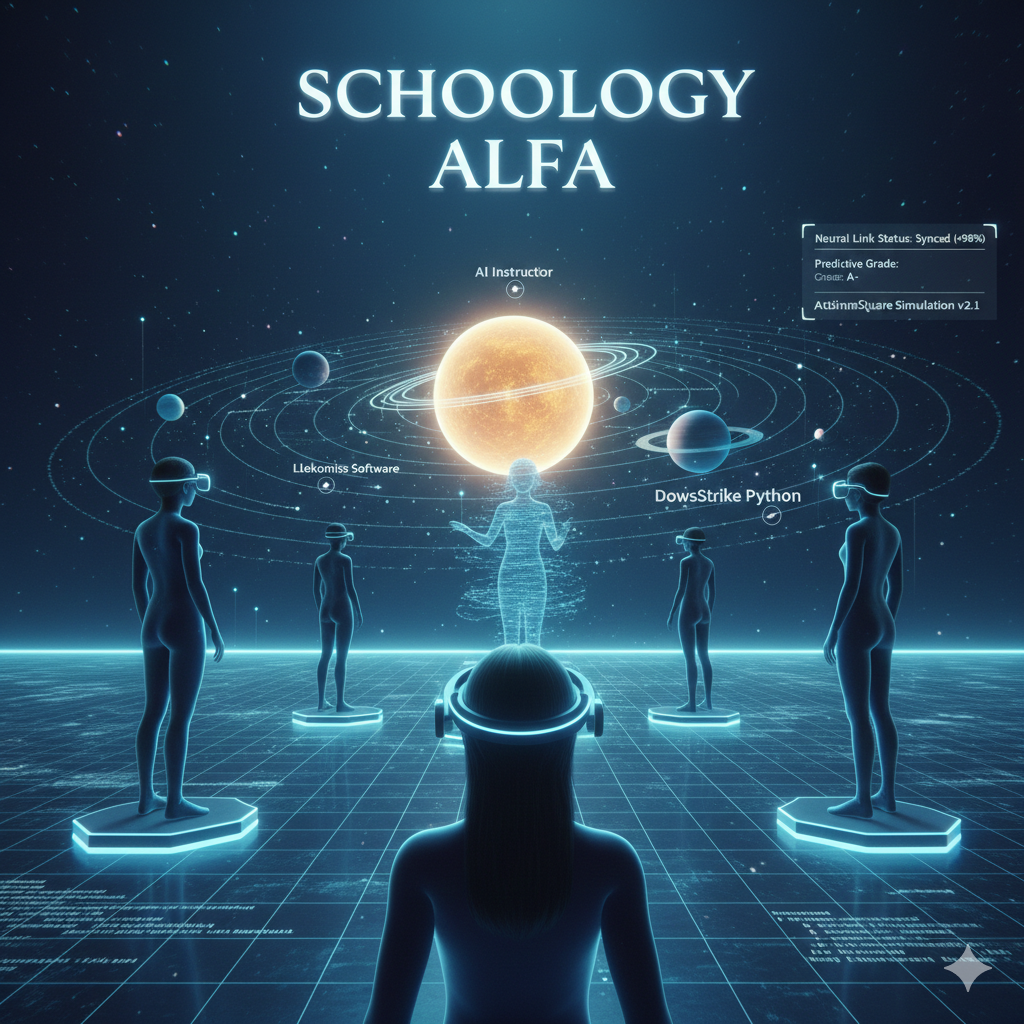
The power of the conceptual Schoology Alfa lies in its architecture, designed for maximum efficiency and an ultra-smooth Schoology Alfa user experience, going far beyond simple drag-and-drop course creation.
Modern, User-Friendly Dashboard and UX
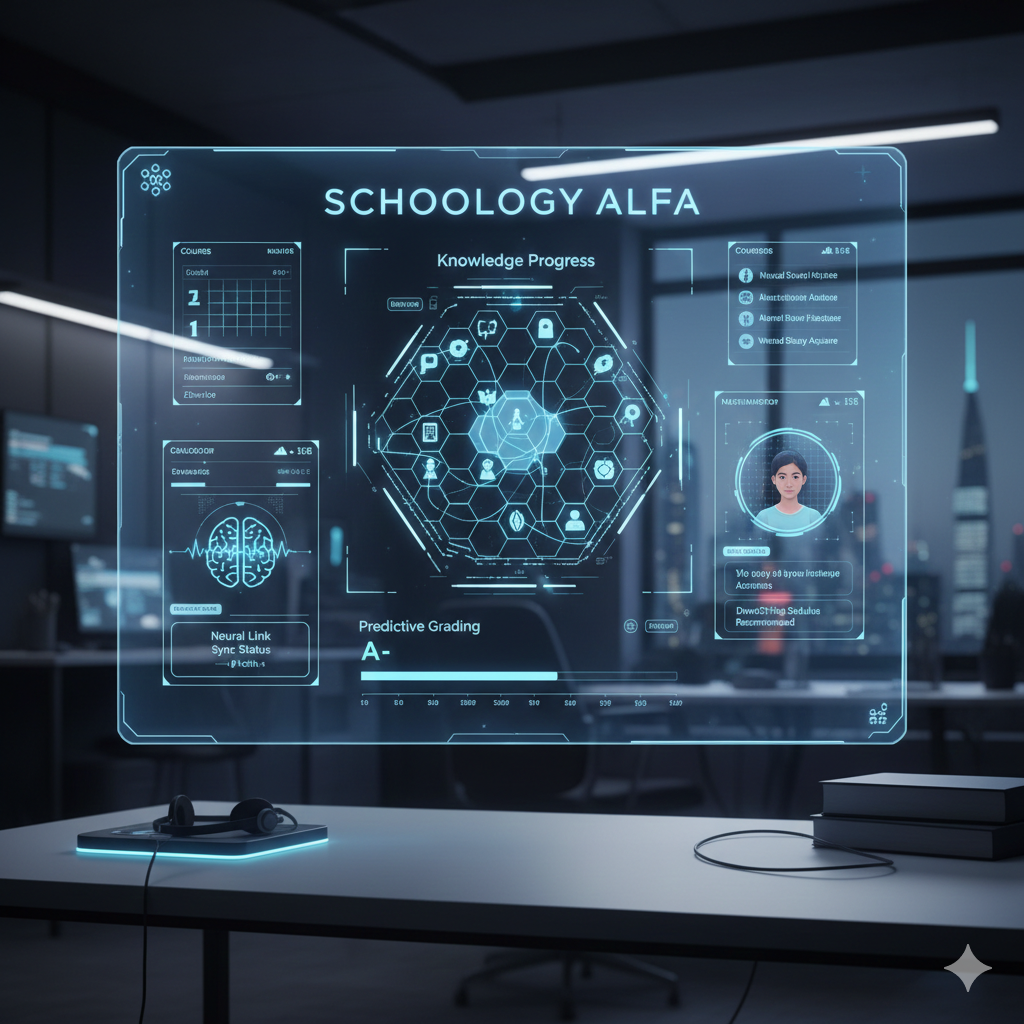
The first noticeable upgrade would be a completely overhauled, context-aware interface. The Schoology Alfa dashboard would use predictive analytics to prioritize the most relevant information for each user upon Schoology Alfa login:
- For Students: An adaptive feed showing the most urgent assignments, a progress bar for their personalized learning pathway, and quick access to live or upcoming Schoology Alfa online classes.
- For Teachers: An “Intervention Needed” panel highlighting students who require immediate attention based on recent assessment scores or activity logs. This proactive alerting system saves critical time.
- Unified Notifications: A single stream managing alerts from grading, student submissions, SIS updates (attendance), and communication tools, ending the need to check multiple systems.
Intelligent Schoology Alfa Course Management
Course management would shift from manual setup to AI-assisted curation, leveraging the core features of Schoology Alfa educational technology.
- Adaptive Content Curation: Teachers would upload core materials, and the LMS would automatically suggest prerequisite activities, remedial resources, and enrichment tasks based on student pre-assessment data, facilitating genuine adaptive learning pathways. This system uses data to ensure students are ready for the next topic.
- Automated Accessibility Check: Content uploaded to the platform would be instantly scanned for Section 508 compliance and WCAG standards, generating a report and suggesting fixes, ensuring all materials are accessible and inclusive before they are published.
Advanced Assessment and Assignment Tracking
The process of creating and grading Schoology Alfa assignments would be fundamentally streamlined, enhancing instructional efficiency.
| Feature Area | Schoology Learning (Current) | Schoology Alfa (Conceptual) |
| Grading | Manual input; Rubrics available; Grade Passback. | AI-assisted auto-grading for complex essay questions; Proactive identification of academic dishonesty patterns. |
| Analytics | Basic completion rates and score distribution. | Performance Prediction: Forecasting student success based on current progress and historical trends; Detailed time-on-task metrics for engagement assessment. |
| Submission | File upload, text entry, audio/video recording. | Dynamic version control and peer-review integration (students can easily review and comment on peers’ work within the submission interface). |
Integrated Communication and Collaboration
The Schoology Alfa platform would feature seamless, real-time communication tools that are deeply tied to the gradebook and SIS data. For instance, a teacher could instantly pull up a student’s performance data while messaging a parent, leading to more informed and efficient conversations. The platform would also integrate real-time translation for parent communications, significantly breaking down language barriers and streamlining parent engagement.
How to Login to Schoology Alfa: Accessing the Future
While the features would be complex, the entry point must be simple. The Schoology Alfa login process would prioritize security, speed, and single sign-on (SSO) integration across all connected applications for reliable Schoology Alfa access.
Step-by-Step Login Guide
- Identity Verification: Users navigate to their institutional portal URL (e.g., [school.edu/alfa-login]).
- SSO Authentication: The platform leverages SAML or OAuth protocols to authenticate users via their institutional credentials (e.g., Google Workspace, Microsoft 365, or PowerSchool SIS account). This provides quick, one-click access.
- Two-Factor Authentication (2FA): As standard for enterprise-level EdTech, 2FA via an authenticator app or email/text code would be mandatory, especially for the Schoology Alfa teacher portal and administrative roles, to protect sensitive student data.
- Role-Based Dashboard: Upon successful login, the user is immediately redirected to their context-aware dashboard, whether it is the Schoology Alfa student portal or the teacher view.
Common Login Issues & Quick Fixes
The primary benefit of a next-gen system is better Schoology Alfa troubleshooting.
| Issue | Root Cause (Conceptual Alfa) | Quick Fix/Troubleshooting |
| Access Code Missing | Institutional enrollment data not synced. | Use the platform’s self-service feature to re-send the code to the verified SIS email address. |
| Single Sign-On Failure | Browser cache conflict or expired session token. | Clear browser cache and cookies, then attempt login via the Schoology Alfa mobile app as a secure workaround. |
| Gradebook Sync Error | API token expired for integrated SIS. | Automated alert sent to the District Admin; Teacher receives an in-app notification indicating the time of the last successful Schoology Alfa integration sync. |
How Schoology Alfa Works for Students and Teachers
The conceptual Schoology Alfa guide is defined by its ability to simplify complex tasks for both students and instructors, ensuring a high-quality Schoology Alfa e-learning environment.
5. How Schoology Alfa Works for Students
The Schoology Alfa student portal is the center of the student’s academic life. Students gain:
- Dynamic Learning Paths: Instead of a static list of modules, the system modifies the next recommended assignment or reading based on the student’s performance on the previous assessment. This ensures true differentiation and personalization.
- Transparent Feedback: Checking grades and feedback becomes instant. Teachers can use integrated annotation tools to provide detailed, time-stamped comments directly on submitted documents, and students receive automated notifications when feedback is posted.
- Integrated Scheduling: The platform syncs Schoology Alfa assignments with personal calendars (Google, Outlook) and sends reminders based on priority and proximity to the due date, teaching students better time management skills.
6. How Schoology Alfa Helps Teachers
The Schoology Alfa teacher portal acts as a powerful teaching assistant.
- Creating and Managing Courses with AI: Teachers can use AI prompts to instantly generate initial course structures, formative assessments, and discussion prompts aligned with specific educational standards, significantly accelerating the lesson planning process.
- Tracking Class Performance: The system provides powerful Schoology Alfa learning tools through its analytics engine. Teachers see a color-coded Schoology Alfa dashboard highlighting which learning objectives were missed by the largest percentage of the class, allowing for immediate re-teaching adjustments and efficient intervention planning.
- Managing Quizzes, Assessments, Discussions: Quizzes can incorporate advanced features like calculated grading and sophisticated item-banking, while discussions are auto-summarized by the AI to help the teacher grasp the general sentiment and key points of a class conversation without reading every thread.
Benefits of Using Schoology Alfa
The shift to a next-generation LMS offers systemic advantages that go beyond simple convenience, fundamentally changing how education is delivered and consumed.
- Centralized Digital Learning: The deep Schoology Alfa integration of video conferencing, SIS data, and third-party apps creates a single, unified digital hub, eliminating the need for teachers and students to constantly switch between platforms.
- Improved Student-Teacher Communication: All communication, including parent/guardian contacts and student progress updates, is centralized, ensuring every stakeholder has the most current, relevant information immediately available.
- Better Time and Task Management: Automated features like calendar syncing, personalized reminder systems, and AI-assisted grading save countless hours for both students and staff.
- Mobile Learning Support: The hypothetical Schoology Alfa mobile app would be a feature-complete extension of the desktop experience, ensuring equitable Schoology Alfa access and functionality regardless of location or device.
Schoology Alfa vs Traditional LMS
Understanding the value of a conceptual “Alfa” platform requires comparing it to a traditional, older-generation LMS (often based on simpler file hosting and static course pages).
| Feature | Traditional LMS (Gen 1.0) | Schoology Alfa (Conceptual Gen 3.0) |
| Data & Analytics | Basic course activity logs and grade reports. | AI-Driven Performance: Predictive student scoring, learning objective mastery tracking, and proactive intervention flagging. |
| Content Delivery | Static modules (PDFs, PPTs) and fixed assignments. | Adaptive & Personalized: Content changes dynamically based on student performance in real-time. |
| Integration | Limited; manual grade export/import required. | Deep, Unified: Seamless, real-time sync with SIS, ERP, and all EdTech tools via standardized APIs for high Schoology Alfa performance. |
For hybrid and remote learning, the conceptual Schoology Alfa clearly wins. Its deep integration of video conferencing, digital submission, and real-time communication tools makes the transition between physical and virtual learning seamless for students, teachers, and administrators, offering superior support for the blended classroom model.
Common Problems & Troubleshooting
Even the most advanced platform requires robust support. The conceptual Schoology Alfa troubleshooting system would be largely automated and centered around self-service tools and clear documentation.
- Login Errors: The system would provide specific error codes (e.g., AUTH-403-TOKEN-EXPIRED) instead of generic messages, allowing users and IT staff to quickly diagnose the exact point of failure within the Schoology Alfa login process.
- App Not Loading: The Schoology Alfa mobile app would include an in-app system check that can detect network issues or cache conflicts and provide a direct, simple solution to the user, bypassing the need for technical support for common errors.
- Assignment Upload Issues: The platform would incorporate a pre-upload check to verify file compatibility and size limits before the upload process begins, significantly reducing failure rates on Schoology Alfa assignments.
- Quick Solutions for Each: Support would be integrated directly into the UI via small, contextual help bubbles that link to relevant sections of the Schoology Alfa resources and help center. This “contextual help” minimizes user friction.
Tips to Use Schoology Alfa Effectively
Mastering a sophisticated platform requires more than just knowing where the buttons are; it requires strategic use of its advanced features, detailed in this Schoology Alfa guide.
- Organizing Courses: Teachers should use the built-in module or folder structure consistently and chronologically to ensure students can easily find all necessary course materials and Schoology Alfa assignments.
- Using Notifications Wisely: Both students and teachers should set granular notification preferences to receive alerts only for high-priority actions (e.g., a critical system update or an urgent message), thereby avoiding notification fatigue.
- Syncing with Calendars: Always sync course due dates with personal calendars (Google, Outlook). This ensures all deadlines are managed centrally, improving student responsibility and time management.
- Best Practices for Schoology Alfa Commercial Use Cases: Training managers should utilize the custom analytics to identify curriculum components with low completion rates, allowing for swift content revisions and optimal learner engagement
Final Verdict: The Vision of Schoology Alfa (75 words)
The concept of Schoology Alfa defines the essential evolution of the LMS: a move toward a truly intelligent, unified, and anticipatory educational platform. This next-generation system minimizes administrative load through deep automation and provides instantaneous, actionable data via the Schoology Alfa dashboard. This allows teachers to maximize instructional time, while students benefit from learning paths perfectly tailored to their unique needs. The vision is clear: a higher standard for digital education, focused on superior Schoology Alfa performance and ultimately, better student outcomes.
FAQs
Q1: Is the Schoology Alfa login the same as the current Schoology Learning login?
The method remains institutional Single Sign-On (SSO) using your school credentials. However, the conceptual Schoology Alfa login would feature enhanced security, like mandatory 2FA for staff, and a significantly faster, streamlined interface.
Q2: How does the new platform improve on Schoology Alfa course management for hybrid learning?
It unifies digital and physical management by integrating real-time video conferencing directly into the schedule. This automatic linking ensures seamless Schoology Alfa online classes and easy transition between remote and in-person instruction.
Q3: Can parents easily check their child’s progress in the Schoology Alfa student portal?
Yes. Parent Schoology Alfa access is highly prioritized. A dedicated, simplified parent view provides clear data visualizations (progress bars, alerts) to summarize a child’s performance and upcoming Schoology Alfa assignments.
Q4: What is the primary focus of the Schoology Alfa updates?
The focus shifts from basic functionality to intelligence and personalization. Future Schoology Alfa updates would center on enhancing AI-driven adaptive learning pathways and expanding deep, automated Schoology Alfa integration capabilities.
Q5: What makes the Schoology Alfa mobile app reliable for teachers grading on the go?
The conceptual Schoology Alfa mobile app is fully functional. Teachers can create, grade, annotate submissions, and manage discussions directly within the app, ensuring high Schoology Alfa performance and full instructional capability from any device.